Hormuz, Red Sea, and the New Oil Risk Premium: What Middle East Escalation Means for Crude, Diesel, Gasoline, and Gas Prices
- Mar 5
- 6 min read
Enerdealers Editorial

For petroleum markets, “Middle East risk” is not a headline—it’s a transmission mechanism. When conflict intensifies around the Persian Gulf and its maritime chokepoints, prices don’t move only on barrels lost; they move on barrels that might not move, ships that won’t sail, and insurance that won’t clear. Over the past few days, that mechanism has re-priced fast: crude has jumped on escalating U.S.–Israeli conflict with Iran and explicit threats around Strait of Hormuz transit, while refined products have moved even more aggressively as traders price supply-chain friction and refinery disruptions.
This article lays out how an expanding Middle East conflict is likely to impact prices across crude, diesel/gasoil, gasoline, jet, fuel oil, naphtha, and natural gas/LNG—and what traders, suppliers, and buyers should watch now.
1) The core channel: chokepoint risk becomes a price component
The Strait of Hormuz is the market’s highest-leverage vulnerability: roughly one-fifth of global oil consumption (and substantial LNG) transits that narrow corridor. Any credible threat—closure claims, attacks on shipping, or even “effective closure” via insurance withdrawal—pushes markets into a risk premium regime.
In early March 2026, shipping behavior itself became market-moving. Reports of tankers avoiding Hormuz amid security threats and insurance cancellations are precisely the kind of non-linear constraint that can tighten physical availability well before upstream production is hit.
Implication: Expect higher volatility, more gap-risk on opens, and a larger divergence between paper liquidity and physical optionality (ships, storage, and deliverability).
2) Crude: from fundamentals to “availability pricing”
Crude’s first response to geopolitical escalation is usually a re-pricing of tail risk rather than an immediate re-balance of global supply/demand. That is why crude can jump quickly even if inventories are not yet drawing: the market is repricing the probability-weighted outcome of disruptions.
Recent price action illustrates this: Brent rose sharply as conflict widened and shipping and infrastructure risks increased.
What to watch in crude (next 2–8 weeks)
Transit proof, not rhetoric: actual loading programs, AIS patterns, and port line-ups. When “avoidance” becomes sustained, differentials move.
Freight and war-risk insurance: these costs can be equivalent to a multi-dollar-per-barrel supply shock. Reuters reported record freight levels and near-cessation of some flows as tensions escalated.
Sour vs sweet differentials: Middle East disruptions typically widen sour crude premia/discounts depending on refinery demand and substitution (e.g., Atlantic Basin reshuffles).
Scenario framing for crude buyers and sellers
Contained escalation: risk premium persists; Brent holds above prior range; backwardation can steepen as prompt barrels are prized.
Intermittent disruption / “effective closure”: violent prompt spikes, extreme time-spread volatility, physical premiums explode.
Sustained outage / regional spillover: true supply shock—strategists have flagged very high upside in severe scenarios.
3) Refined products: why diesel often moves first and hardest
In this kind of shock, refined products can outperform crude because the market is pricing refining system stress, not just feedstock cost. Europe is structurally sensitive in middle distillates, and distillate logistics are freight- and route-dependent.
Bloomberg reported fuel prices jumping alongside oil, with diesel in Europe surging more than crude and crack spreads rising sharply—classic symptoms of immediate supply tightness and replacement-cost panic. Reuters also noted refined product futures rising strongly alongside crude as conflict risk escalated.
Diesel/gasoil (middle distillates)
Why it spikes:
Middle distillates are the “workhorse” barrel (industry, trucking, heating), and inventories can be less forgiving than gasoline.
Any disruption to Gulf refining/export flows or shipping lanes tightens prompt availability into Europe and Asia.
Distillate cracks can gap higher as refiners face crude slate issues, operational disruptions, or simply a scramble for replacement cargos.
Commercial takeaway: If you are short diesel exposure (physical or pricing), hedging crack risk (not just flat price) becomes critical—because diesel can rally disproportionately.
Gasoline
Gasoline’s response can be less immediate than diesel depending on seasonality, but war-risk freight, route diversion, and refinery disruptions can still lift prompt gasoline differentials. In a broad risk-off move, gasoline can initially track crude, then decouple if refinery yields and regional balances tighten.
Watch: regional arbitrage closures—if freight spikes or transit risk blocks the economics of moving gasoline, local shortages emerge quickly.
Jet fuel
Jet often lags diesel by days but can become sticky on the upside if refinery operations or regional supply hubs are disrupted. Kpler’s market commentary highlighted expectations for jet and gasoil cracks to respond sharply when Strait transit is threatened.
Fuel oil and bunkers
Conflict-driven rerouting (e.g., avoiding Red Sea/Suez and/or Hormuz risk zones) increases voyage length and bunker demand, tightening fuel oil markets. Analysts have explicitly pointed to higher bunker demand when ships divert to longer routes.
Naphtha and petrochemical feedstocks
Naphtha can behave in two directions:
Up with crude via feedstock inflation and logistics tightness; or
Down relative to crude if high absolute prices crush downstream petrochemical demand or shift feed slates.
Wood Mackenzie flagged petrochemicals as vulnerable under an oil shock, with naphtha values pressured by downstream weakness even as the system runs hotter.
4) Natural gas and LNG: the “gas shock” risk is real
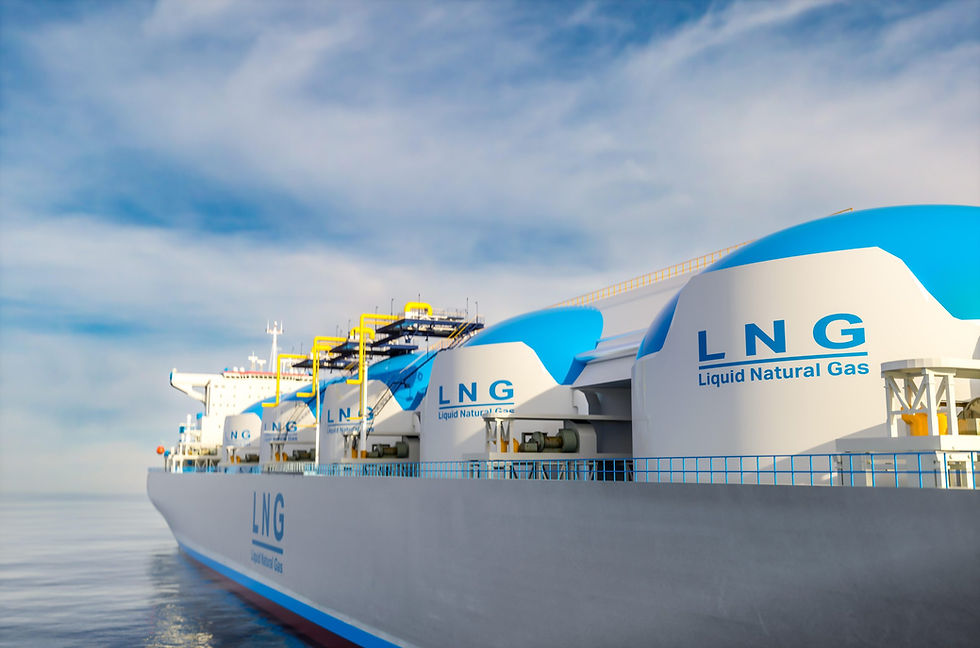
Oil headlines dominate, but gas can deliver the nastier macro shock—especially for Europe and North Asia—if Gulf LNG flows are constrained or freight becomes scarce/expensive. Reporting in early March 2026 described Qatar halting LNG output following attacks and broader regional instability, with European gas prices reacting sharply.
Why LNG can move faster than crude in an escalation:
Cargoes are less fungible operationally (liquefaction trains, shipping availability, contractual constraints).
Spot LNG is extremely sensitive to freight, boil-off, and route risk.
Any Hormuz-related disruption has outsized impact because of Gulf export concentration.
Reuters reported LNG shipping rates jumping and Qatar-related disruptions feeding the global shipping cost spike.
Commercial takeaway: For industrials and utilities, the priority is not only commodity hedging, but also delivery assurance—diversifying supply points, checking force majeure language, and reassessing credit exposure to counterparties caught in transit disruption.
5) Freight, insurance, and “invisible outages”
A modern energy shock is often a logistics shock before it is a production shock. Even when barrels exist, they may not clear:
War-risk premia surge
Owners refuse fixtures
Insurers pull coverage
Ports slow down under threat conditions
Reuters reported record-high VLCC earnings on key Middle East-to-Asia routes and significant operational hesitation from shipowners.
For traders and procurement teams, this shifts the game from pure price negotiation to optionality management:
Multiple load ports and discharge windows
Broader spec tolerance (where operationally safe)
More storage as a strategic asset
Stronger demurrage and diversion clauses
Conclusions: What decision-makers should do now
Assume the risk premium is “sticky” until shipping normalizes. The market will not fully relax on ceasefire headlines alone; it relaxes when flows and insurance normalize.
Expect products to lead crude in volatility. Diesel/gasoil and jet cracks can gap higher on real or perceived logistics constraints, even if crude stabilizes.
Treat freight and insurance as first-class price drivers. In a chokepoint event, delivered cost can rise sharply even without upstream outages.
For buyers: hedge both flat price and crack exposure. If your risk is end-product (diesel, gasoline, jet), crude-only hedges can leave you exposed to refinery/logistics premia.
For suppliers and traders: optimize optionality over precision. In stressed markets, the winner is often the book with the most deliverability (storage, alternate routes, flexible specs), not the tightest model.
In short: the Middle East conflict is reasserting an old truth with modern speed—energy prices are set not just by supply and demand, but by the security of the pathways between them.
Sources
Reuters — “Oil rises as expanding U.S.-Israeli conflict with Iran elevates supply risks” (March 3, 2026). (Reuters)
Reuters — “Global oil, gas shipping costs surge as Iran vows to close Strait of Hormuz” (March 2, 2026). (Reuters)
Reuters — “Iran vows to attack any ship trying to pass through Strait of Hormuz” (March 2, 2026). (Reuters)
Bloomberg — “Fuel Prices Jump More Than Oil as Iran War Hits Supply” (March 2, 2026). (Bloomberg.com)
The Guardian — “Gas prices soar and oil jumps as Iran war pushes down global stock markets” (March 2, 2026). (The Guardian)
Euronews — “European gas prices jump… as Qatar stops LNG production” (March 2, 2026). (euronews)
Wood Mackenzie — “Middle East conflict set to drive oil and LNG prices significantly higher” (March 2026). (Wood Mackenzie)
Oxford Economics — “Iran and the Strait of Hormuz: risks to global energy prices” (March 2026). (Oxford Economics)
Kpler — “US-Iran conflict: Strait of Hormuz crisis reshapes global oil markets” (March 2026). (kpler.com)