


How the Iran War Is Disrupting Trade, Industry, and Food Systems
Enerdealers Editorial
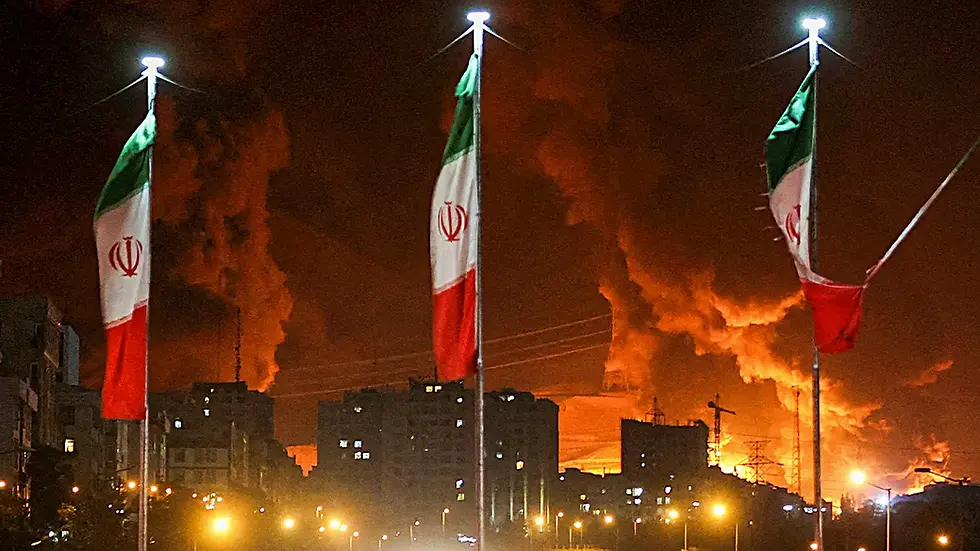
The war involving Iran has become far more than a regional security crisis. By disrupting the Strait of Hormuz and destabilizing energy, shipping, and insurance markets, it is now hitting the physical and financial plumbing of global trade.
For business and policy leaders, the key point is that this is not an “oil only” shock. It is a multi-industry supply crisis that is raising freight costs, tightening raw material availability, and feeding inflation across sectors from fertilizers and aluminum to semiconductors, pharmaceuticals, packaging, and food.
A chokepoint with global consequences
The Strait of Hormuz is one of the world’s most important maritime corridors, and its disruption affects far more than tankers. When vessels are delayed, rerouted, or forced to wait for insurance clearance, the impact spreads through energy markets, industrial inputs, and final consumer goods.
That is why this crisis has such broad macroeconomic reach. Supply chains today operate with limited slack, so even a partial closure or heightened risk environment can trigger stockpiling, longer lead times, higher contract prices, and production delays thousands of miles away.
Energy is only the first layer
The obvious impact is on oil and gas. Gulf supply disruptions tighten global balances, push up volatility, and force refiners, utilities, and industrial buyers to compete for alternative cargoes in a market that quickly becomes more expensive and less predictable.
But the deeper issue is that energy is an input into nearly every major industrial system. Higher oil, LNG, and power costs increase the price of transport, chemicals, metals processing, agriculture, refrigeration, and manufacturing, which means the shock is transmitted well beyond the energy sector itself.
Gulf supply disruptions tighten global balances, push up volatility, and force refiners, utilities, and industrial buyers to compete for alternative cargoes in a market that quickly becomes more expensive and less predictable.
Shipping and insurance as the real bottlenecks
One of the clearest lessons from the crisis is that insurance markets can become the point where geopolitics turns into a trade stoppage. War-risk premiums have surged sharply, some insurers have withdrawn cover, and shipping lines have diverted vessels to longer routes to avoid exposure.
That matters because trade does not move just when goods exist; it moves when financing, insurance, and liability are in place. If a tanker or container ship cannot secure affordable cover, the cargo may stay anchored, the delivery may be delayed, and the final cost may rise long before a shortage appears on store shelves or factory lines.

Aluminum: a supply chain under pressure
Aluminum is one of the most important non-oil industries being hit by the crisis. Reports indicate that the Strait of Hormuz disruption has tightened Middle Eastern availability and pushed premiums higher in Europe, the US, and Japan, exposing structural vulnerabilities in the global metals system.
This is significant because aluminum is used everywhere: transport, construction, packaging, electrical systems, electronics, and defense. A squeeze in primary aluminum supply does not stay confined to metal markets; it ripples into auto production, aerospace, consumer goods, and infrastructure budgets.
Sulfur and fertilizers
Sulfur is another overlooked but critical casualty. Gulf-region flows account for a major share of global sulfur supply, and sulfur is a key feedstock for sulfuric acid, fertilizers, mining, refining, and chemical processing.
The fertilizer link is especially important for policy makers because food systems are highly sensitive to industrial inputs. If sulfur or related chemicals become more expensive or harder to source, farmers face higher input costs, crop nutrition becomes more expensive, and food inflation can accelerate with a lag.
Helium, petrochemicals, and specialty inputs
The crisis is also affecting smaller markets that have outsized strategic importance. Helium, for example, is essential in semiconductor manufacturing, medical imaging, scientific research, and certain industrial processes, and disruptions in Gulf-linked gas processing can quickly affect availability elsewhere.
Petrochemicals are under similar pressure. Ethylene, methanol, and related products feed plastics, packaging, textiles, adhesives, coatings, and automotive components, so a regional bottleneck can turn into a broad industrial cost shock even where the final product has nothing to do with the Middle East.
If sulfur or related chemicals become more expensive or harder to source, farmers face higher input costs, crop nutrition becomes more expensive, and food inflation can accelerate with a lag.
Food and agriculture exposure
Food inflation is one of the most politically sensitive spillovers from the conflict. Fertilizer costs, shipping delays, and energy price increases all feed into the cost of crops, animal feed, processing, storage, and distribution.
The World Food Programme and other observers have warned that these second-round effects can last longer than the military phase of the crisis. Even if shipments resume, higher insurance costs, depleted inventories, and cautious procurement behavior can keep food and input prices elevated for months.
Industrial production and manufacturing
The manufacturing sector is particularly exposed because it depends on synchronized delivery of intermediate goods. When a port delay affects one shipment of chemicals, metals, or gas-derived inputs, production lines can stop waiting for parts that are cheap in isolation but expensive to miss in sequence.
That creates a multiplier effect. A delay in one upstream market can reduce output in downstream industries such as electronics, automotive, packaging, appliances, and construction materials, especially where firms run lean inventories and depend on just-in-time logistics.
Companies are responding in familiar but expensive ways. Many are adding safety stock, diversifying suppliers, expanding carrier options, and looking at nearshoring or reshoring for critical inputs.
Inflation and macroeconomic risk
The macroeconomic risk from this crisis is not limited to headline energy prices. Higher freight costs, insurance surcharges, and input shortages create a broader inflation impulse that central banks and finance ministries cannot easily offset.
For import-dependent economies, especially in Asia and parts of Europe, the combination of dearer energy, more expensive shipping, and costlier industrial materials can squeeze margins, weaken industrial output, and complicate policy decisions at a time when growth is already fragile.
Corporate response: resilience over efficiency
Companies are responding in familiar but expensive ways. Many are adding safety stock, diversifying suppliers, expanding carrier options, and looking at nearshoring or reshoring for critical inputs.
This shift is not a temporary public-relations gesture; it is a structural correction. Firms that previously optimized supply chains for cost now have to optimize for resilience, even if that means higher working capital, more complex procurement, and lower short-term returns.
What policy makers should watch
Policy makers should treat the crisis as an economic-security event rather than a narrow maritime incident. The most important indicators are tanker traffic, war-risk premiums, industrial input prices, fertilizer availability, and the stability of logistics financing.
Governments may need to coordinate reserve releases, support strategic imports, and maintain open channels with insurers, shippers, and commodity traders. In parallel, they should review exposure to single-route dependencies and critical-material bottlenecks that the conflict has now made impossible to ignore.
The Iran war is demonstrating that modern supply chains are only as strong as their weakest geopolitical link.
The bigger lesson
The Iran war is demonstrating that modern supply chains are only as strong as their weakest geopolitical link. A chokepoint in the Gulf can interrupt not just crude exports, but also industrial metals, fertilizer inputs, specialty gases, and the financial terms that allow trade to happen at all.
That is why this crisis deserves to be understood as a global supply shock, not a regional war story. It is exposing how deeply energy, shipping, insurance, and industrial production are now intertwined — and how quickly one disruption can cascade across the world economy.
Conclusion
For executives, the immediate task is to protect continuity: diversify sourcing, reassess route risk, and stress-test exposure to shipping and insurance disruptions. For governments, the task is broader: reduce dependence on fragile corridors, reinforce strategic reserves, and prepare for inflationary spillovers that can outlast the conflict itself.
The broader warning is unmistakable. In a global economy built on just-in-time logistics and thin margins, a war in the Gulf can disrupt everything from fertilizer and aluminum to food and electronics. The companies and countries that treat resilience as a strategic capability, not an optional cost, will be better prepared for the next shock.
Key learning | What it means for decision makers |
The crisis is bigger than oil | The Iran war is disrupting shipping, insurance, fertilizers, metals, petrochemicals, and food systems, so leaders need to treat it as a broad supply-chain shock rather than an energy-only event. |
Insurance and freight are the transmission channels | Even when goods are available, higher war-risk premiums, rerouting, and delays can block trade, raise costs, and interrupt production across multiple industries. |
Resilience now matters more than efficiency | Companies and governments need more diversification, higher inventories for critical inputs, and contingency planning to reduce exposure to chokepoints like the Strait of Hormuz. |
Sources
Oxford College of Procurement and Supply, “How the Iran Conflict Is Disrupting Global Supply Chains” — https://www.oxfordcollegeofprocurementandsupply.com/how-the-iran-conflict-is-disrupting-global-supply-chains/ oxfordcollegeofprocurementandsupply
AInvest, “Strait of Hormuz Closure Threatens Aluminum, Sulfur Flows” — https://www.ainvest.com/news/strait-hormuz-closure-threatens-aluminum-sulfur-flows-amplifying-supply-risk-metals-sector-2603/ ainvest
WION / YouTube, “War Risk Insurance Soars…” — https://www.youtube.com/watch?v=SLTZIrqvyt4 youtube
YouTube, “Can global supply chains recover from the Iran war?” — https://www.youtube.com/watch?v=TZ_diAdH5Kg youtube
Fastmarkets, “Aluminium supply concerns from the Strait of Hormuz” — https://www.fastmarkets.com/insights/strait-of-hormuz-closure-fuels-european-us-aluminium-supply-concerns/ fastmarkets
Business Insider, “It’s not just oil: 3 critical supply chains being upended by the war in Iran” — https://www.businessinsider.com/oil-prices-supply-chains-iran-war-ai-helium-food-inflation-2026- 3businessinsider
Reuters, “Risks to Western aluminium supply rise as Iran war escalates” — https://www.reuters.com/markets/commodities/risks-western-aluminium-supply-rise-iran-war-escalates-2026-03-03/ reuters
DredgeWire, “War Risk Premiums to Surge as Strait of Hormuz Closure Disrupts Global Trade” — https://dredgewire.com/war-risk-premiums-to-surge-as-strait-of-hormuz-closure-disrupts-global-trade/ dredgewire
Roland Berger PDF, “The Iran conflict: global supply implications beyond oil” — https://www.windkraft-journal.de/wp-content/uploads/2026/03/Roland-Berger-Analyse_Impact-of-Iran-conflict-on-supply-chains.pdf windkraft-journal


