


Europe’s LNG Map After Hormuz
Enerdealers Editorial
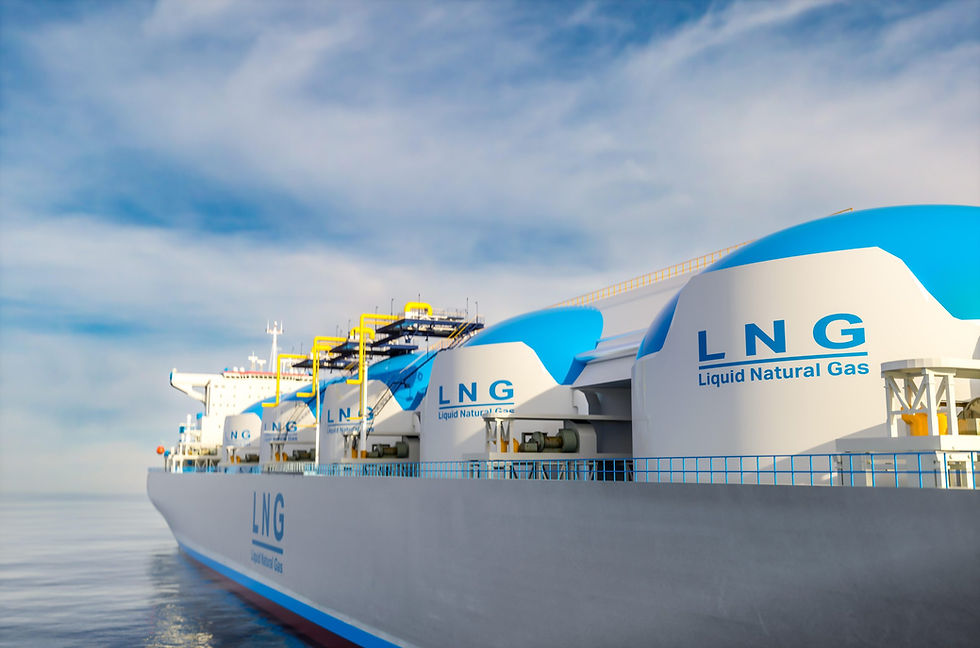
The Iran war and the effective closure of the Strait of Hormuz have not created a total European LNG supply shock, but they have changed the economics, route risk, and origin mix of cargoes flowing into Europe. The result is a market that is still supplied, but more expensive, more competitive, and more dependent on a handful of Atlantic and North Sea suppliers than it was only weeks ago.
For traders, buyers, and suppliers, the key issue is no longer whether Europe can access LNG, but at what price, through which routes, and with which counterparties. In practice, the disruption has pushed Europe to lean even harder on U.S. LNG and nearby pipeline gas, while reducing the reliability of Gulf-linked cargoes that traditionally helped balance the market.
What changed
The Strait of Hormuz is central to LNG logistics because roughly 20% of global LNG normally transits it, and a large share of that volume is associated with Qatar and the United Arab Emirates. With the strait effectively closed, the market lost a major export corridor just as Europe was already under pressure to refill storage for next winter.
Reuters reported that European buyers need to secure around 700 LNG cargoes, or about 67 bcm, to replenish storage this summer, roughly 180 cargoes more than the previous year. That requirement collided with the new disruption in Gulf supply, tightening the market further and raising the cost of European storage refill.
The immediate commercial effect has been a higher Asian premium for LNG, which tends to pull flexible spot cargoes away from Europe when prices there are stronger. In other words, Europe is not only competing with Asia for fewer available molecules; it is also competing with a region that is structurally more exposed to Gulf LNG disruption and therefore more aggressive in securing replacement cargoes.

Europe’s new supply mix
The European Commission says that the U.S. supplied 58% of EU LNG imports in 2025, making it by far the dominant external source, while Qatar accounted for a much smaller share and Russia remained present despite sanctions. Eurostat-based reporting for 2025 also shows the U.S. supplying 56% of EU LNG, followed by Russia at 13.9%, Qatar at 8.9%, Algeria at 6.6%, and Nigeria at 4.2%.
That mix matters because the Hormuz shock hits the smaller but strategically important Gulf component first. The European Commission notes that the largest LNG exporters in 2025 were the U.S., Qatar, and Australia, but for Europe specifically the U.S. has become the anchor supplier, while Qatar is the most exposed Gulf supplier in the post-Hormuz scenario.
A useful way to frame the shift is that Europe’s LNG supply is now split between three broad blocks. The first is Atlantic LNG, led by the U.S.; the second is nearby pipeline and regional supply from Norway, North Africa, the U.K., and Azerbaijan; and the third is Gulf-linked LNG, especially Qatar, which has become less reliable because of the strait closure.
Eurostat-based reporting for 2025 also shows the U.S. supplying 56% of EU LNG, followed by Russia at 13.9%, Qatar at 8.9%, Algeria at 6.6%, and Nigeria at 4.2%.
Route reconfiguration
The first reconfiguration is geographic. With Hormuz constrained, Europe’s most reliable LNG routes are those that avoid the Gulf entirely, especially cargoes from the U.S. Gulf Coast and, to a lesser degree, from Atlantic Basin sources that can be delivered without traversing the chokepoint. That is why the U.S. share of EU LNG has become strategically central rather than merely commercially important.
The second reconfiguration is commercial. Reuters said Europe’s storage refill problem is now more expensive because the cost of the extra cargoes needed for summer injections jumped sharply as the conflict tightened supply. When Gulf LNG is disrupted, European buyers have to rely more on prompt cargoes from other origins, and prompt cargoes are typically the most sensitive to spot price spikes.
The third reconfiguration is operational. Europe’s LNG import capacity has grown by 76 bcm between 2021 and 2025 to 242 bcm per year, with another 100 bcm expected between 2025 and 2030. But infrastructure does not remove physical market constraints: LNG still has to be sourced, shipped, scheduled, and regasified, and that becomes harder when one of the world’s most important export corridors is disrupted.
Norway still supplied 54% of EU pipeline gas in 2025, followed by North Africa at 19%, the U.K. at 8%, and Azerbaijan at 7%, but the remaining balancing role increasingly fell to LNG.
From pipelines to LNG
The war in Iran did not occur in a vacuum. Europe had already been replacing Russian pipeline gas since 2022, and that structural shift made LNG a larger part of the continent’s gas balance before the Hormuz shock even began. The European Commission says Russian pipeline gas fell from 137 bcm in 2021 to 18 bcm in 2025, an 87% drop, while LNG’s share of total EU gas imports rose from 20% in 2021 to 45% in 2025.
This means Europe entered the Hormuz crisis with a market already organized around LNG flexibility, not pipeline comfort
That balance matters for decision makers because pipeline gas is relatively stable while LNG is the shock absorber. When LNG from the Gulf becomes uncertain, Europe’s margin of flexibility shrinks, especially in periods when storage needs are high and heating demand has not fully disappeared.
Quantifying the squeeze
The scale of the immediate market stress is visible in several numbers. Reuters cited analysts who estimated that the summer refill challenge could require around 700 LNG cargoes, or 67 bcm, for Europe. It also reported that the incremental cost of the extra 180 cargoes needed versus the previous year rose to about $10.1 billion, while the total cost of the 67 bcm summer refill reached roughly $40 billion.
A separate market note said European demand in early March ran 14% below seasonal expectations, reducing apparent demand by 2.5 bcm and partially offsetting the loss of Gulf supply. That relief, however, is cyclical and weather-driven, not structural, so it cannot be counted on as a durable hedge against a prolonged Hormuz disruption.
Another important statistic is that the European Commission expects global LNG supply to rise by over 50 bcm in 2026, which should ease market pressure later in the year. But the timing matters: even if more global liquefaction capacity comes online, a short-term closure of Hormuz can still distort route economics immediately and force Europe to bid more aggressively for Atlantic cargoes.
The biggest winner in this reconfigured market is the United States. The Commission’s data show the U.S. already supplying the majority of EU LNG.
Who wins and who loses
The biggest winner in this reconfigured market is the United States. The Commission’s data show the U.S. already supplying the majority of EU LNG, and the current disruption strengthens that position further because U.S. cargoes are outside Hormuz and are among the most flexible for Europe to source quickly.
Qatar is the biggest loser on the supply side, not because of weak demand, but because the export route itself is compromised. Reuters-linked reporting and market commentary show that the Gulf shock removed a meaningful volume from global LNG availability, and Qatar’s centrality to Hormuz means even partial disruptions have disproportionate effects.
Europe’s second-tier suppliers also gain relative importance. Algeria, Nigeria, and the U.K. are not replacing Qatar one-for-one, but every incremental cargo from a non-Hormuz source reduces Europe’s exposure to route risk. In the pipeline segment, Norway remains indispensable, because it gives Europe a non-LNG balancing pillar when LNG economics become distorted.
Commercial implications
For traders, the main implication is a stronger Atlantic Basin premium. When Europe and Asia both scramble for non-Gulf LNG, route optionality becomes a pricing instrument, and ships are diverted toward the highest netback market. That can leave Europe paying more even when physical cargoes are still available.
For buyers, the strategy has shifted from simple procurement to resilience management. Contract tenor, destination flexibility, shipping availability, and access to regasification capacity now matter more than ever, because a cargo sourced from the “right” basin may still be uneconomic if freight and prompt premiums are too high.
For suppliers, the message is different. Producers with Atlantic export capacity, spare liquefaction flexibility, or access to unconstrained shipping routes are better positioned than suppliers dependent on chokepoint logistics. In the near term, that improves the bargaining power of U.S. exporters and of European sellers with flexible portfolio LNG.
The Hormuz crisis has shown that Europe can have adequate LNG infrastructure and still face a supply squeeze if the wrong molecules are trapped behind a chokepoint.
Strategic reading
The broader strategic lesson is that Europe’s LNG security is no longer just a matter of replacing Russian gas. It is now also about reducing exposure to single-route vulnerabilities, especially in the Middle East. The Hormuz crisis has shown that Europe can have adequate LNG infrastructure and still face a supply squeeze if the wrong molecules are trapped behind a chokepoint.
That makes diversification more than a political slogan. It means broader sourcing across the U.S., North Africa, Norway, and other accessible suppliers; better use of interconnectors and storage; and more contractual flexibility to switch origin when a route deteriorates. Europe can import LNG from many places, but it cannot afford to rely too heavily on any corridor that can be closed by geopolitics.
Conclusion
The Iran war and the closure of the Strait of Hormuz have reconfigured Europe’s LNG map by raising the value of route security over simple supply volume. Europe is still buying LNG, but it is buying more of it from sources that do not depend on the Gulf, especially the United States, while Gulf-linked suppliers such as Qatar face a much weaker logistical position.
The market signal is clear: Europe’s LNG system has become more resilient than it was in 2021, but also more exposed to global competition and short-term price shocks. In the current environment, the decisive edge goes to buyers and suppliers that can combine origin flexibility, shipping optionality, and storage discipline.
Sources
European Commission, Liquefied natural gas: https://energy.ec.europa.eu/topics/carbon-management-and-fossil-fuels/liquefied-natural-gas_en
Reuters, “Europe faces gas storage scramble as Iran conflict tightens supply”: https://www.reuters.com/business/energy/europe-faces-gas-storage-scramble-iran-conflict-tightens-supply-2026-03-05/
Reuters, “Explainer: Where does the EU get its gas and how is it impacted by the Iran conflict?”: https://www.reuters.com/business/energy/where-does-eu-get-its-gas-how-is-it-impacted-by-the-iran-conflict-2026-03-19/
CNBC, “There's another energy market that may get hit harder than oil by Strait of Hormuz closure”: https://www.cnbc.com/2026/03/09/theres-another-energy-market-that-may-get-hit-harder-than-oil-by-strait-of-hormuz-closure.html
European gas market commentary on demand and Hormuz disruption: https://europeangashub.com/european-gas-demand-falls-sharply-offsetting-strait-of-hormuz-lng-disruption-impact.html
European Commission quarterly gas market report summary: https://energy.ec.europa.eu/news/quarterly-reports-highlight-progress-gas-and-electricity-markets-q2-2025-2026-01-15_en


